

December 1, 2016
Interview: Michael Coven, Brandeis men's coach
|
Other Interviews:
|
D3Soccer.com had the opportunity to interview the coaches of the four men’s teams heading to the Final Four. Michael Coven, head coach at Brandeis, spoke with Ryan Harmanis about his perspective after 44 years of coaching, his team’s approach to the game, and their mentality now that they’ve broken through to the Final Four.
|
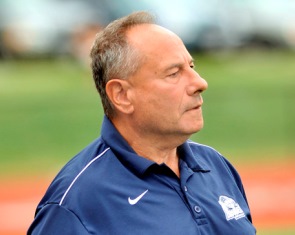
| Michael Coven - 44th-year head coach of Brandeis Brandeis Athletics |
Ryan Harmanis: Congratulations, what a year you guys have had. Let’s start with the NCAA tournament. You had a pretty tough road, you’ve seen NESCAC schools in the past, but you’ve played them better in recent seasons, and that continued against Amherst [in the Sweet Sixteen]. Have you made any adjustments to facing those teams?
Coach Michael Coven: I think it’s just the makeup of the teams. I think Amherst and Brandeis play contrasting styles, in that they’re more direct, they’re big, athletic, very talented, and they get after it and put you under a ton of pressure. They really play to create chaos in your defensive third of the field. We slow it down a bit, try to keep the ball a little more, even in our own end. But it hasn’t worked that well, we’ve lost at Amherst three out of the last four or five years in the second weekend of the tournament.
I think this year’s team, although we do try to keep the ball, in line with our philosophy, we played, particularly against Amherst, a little more direct. I think our four backs are very good defenders, they’re very athletic, I don’t know if they have the exact same technical ability our backs have had the last four years. So they’ve been forced to play the ball quicker out of the back, maybe a little more direct. When they’re under pressure, instead of trying to always play out of the back and keep the ball, this group wins the ball and gets forward with it a lot quicker. If that means bypassing the midfield at times, so be it. And it worked against Amherst this year; it’s been effective for us. We didn’t change our style that much, but we changed it a bit because of the team’s personality.
RH: The other thing about that game, the penalty shootout. Your goalkeeper [Ben Woodhouse] made some incredible saves.
Coach Coven: Yeah, he’s really, really good. He’s been all-conference the last few years, and I think he’s one of the best goalkeepers in the country. Once the regular season is over, and we know we’re heading into tournament play, where penalty kicks might play a role, we train every day. Our goalkeeping coach Sean Eyde has been working with our team and Ben for two years now, and does such a good job. And then one of my former goalkeepers, his name is Jim Leahy, he played here in the mid-80s, when we lost in the national final to Wheaton (Ill.), he was our goalkeeper and won the award as best goalkeeper for all divisions back then. He’s still very active with the game. He comes down a few times a week to work with our goalkeepers, and he’s worked with Ben specifically with tips on how to save penalties. Seemingly it’s worked [laughs], because he was pretty darn good the other day.
RH: Let’s back up then, back to the first round game. You’re in control for the entire game, dominating possession, dominating stats, but then you give up a goal with three or four minutes left. How do you regroup heading into overtime to go on and win the game?
Coach Coven: You know, I didn’t have to say too much. I think the boys got a bit lazy for a minute. We did dominate the play, and I think we were the better team, but we got lazy. And I’ll tell you what led to it. When we lose possession, everybody defends, including our forwards. One of our forwards got fouled, somewhere along the midfield line, and started arguing with the official as the game was playing on. He should have gotten the call, but he’s arguing with the official instead of defending, so he didn’t come back and play defense. It was like a domino effect, everyone had to step up, and it led to their goal.
We spoke to the boys about not losing their focus, not complaining to the officials about calls they don’t get. This is a pretty senior-laden team, we’ve got a bunch of guys who have been here for four years, and they’ve made two Sweet Sixteens and one Elite Eight. So they’re hungry, and they know it’s their last chance, so they regrouped real quick and focused on getting it back. It’s funny, the guy who was arguing with the official and lost his defensive assignment was the one who scored the goal to win it in the overtime.
It’s an easy group to motivate, because they’re very self-motivated. They’ve been there, they aren’t awed by the fact that we’re in the NCAA tournament and going deep into it, and they’ve lost. We haven’t made a Final Four, so they’re real hungry. The minute we lost last year to Trinity (Texas) in the Sweet Sixteen, the very next day they were talking about this season. So a very focused group, and easy to coach because of that.
RH: So having been so close, did you feel like the team was dealing with any added pressure? You didn’t have the greatest start to the season, did that play a role at all?
Coach Coven: You know what it was, we had a lot of key injuries early on and then getting guys back to their level just took awhile. Our two big front runners, Evan Jastremski and Zach Viera: Evan had a concussion—he had one last year too—so it took him a while to get back; Zach—they thought he had mono—had no energy early on. Josh Burgh and Mikey Lynch, two midfield players, they both had hernia operations, so we were battling serious injuries. Then once they started coming back their match fitness wasn’t there.
I think we really started a turnaround when we played pretty well against Chicago, even though we lost in overtime. At that point I had almost my whole team back healthy, ready to play, and you could see the turnaround. The irony of it, we had one freshman playing a lot, then he gets hurt in that game. But he’s back for the tournament now. So I don’t think it was added pressure, we just didn’t have our group out there, the one that’s playing right now.
RH: So last question looking back, you get the big win over Amherst, double overtime, penalty kicks, a physical, draining game. Where did you find the energy to come out against Rutgers-Newark and jump on them from the off? How did you prepare your team to play a second game in less than 24 hours?
Coach Coven: I’ll tell you, that’s part of the UAA, we’re playing back-to-back games every weekend. We’ll fly out and play Chicago on Friday night, then get in a plane and fly from Chicago to St. Louis and play Washington U. on Sunday morning. So with our UAA games, you’re playing twice in less than three days, so we’re used to that.
And then the culture here matters, because soccer is very important at Brandeis. There’s no football team, we have a great tradition, and our boys really want it. They train hard, they’re very dedicated, and it’s not just this year. We’re very fortunate with our student athletes, they love the game, they train year-round, they just love to play. Again, this team is just so hungry because they haven’t made the Final Four even though they’ve been so, so close. So I think they saw it was within their grasp and they just came out flying.
RH: So a question about getting close the last few years. You’ve had great, great teams, but this is the one that breaks through. Is it just that the breaks have gone your way this year? And have you heard from former players? I know what it’s like to be on the verge, graduate, and then see all your buddies get the job done.
Coach Coven: Oh yea, they come to all of our games. Jake Picard was an all-region center midfielder, a captain last year, he’s a volunteer assistant. One of the guys works at Massachusetts General Hospital, he’s at every game. Conor Lanahan, who was Division III defender of the year, he’s prepping to go to medical school, he comes to all of our games. Robbie Lynch, another captain from last year, he’s working in finance in Boston, and he’s coming to talk to the team Tuesday night before we head out. So they’re all heavily involved, we have a big, dedicated alumni group. They’re all saying the same thing, that it leaves a bitter taste when you don’t quite get there, so they’re urging the team to take advantage of the opportunity they have.
What I think for this year’s team, it’s the way we started off. The last three of four years we’ve had great seasons, we’ve been fortunate to win most of our games, and I don’t want to say they weren’t as hungry once it came to the tournament, but that’s not how it went this year. Our guys dug themselves a pretty deep hole early on, and until the tournament bids came out, we weren’t sure if we’d even make the tournament. So I think at that point we know we were playing really well, but was it too late? When they saw it wasn’t, they were just juiced and inspired to go as far as they could. So the other groups had an easier time making the tournament, where this group had to be a little more gritty, and had to fight a little more to get where they are. Hopefully that fight carries us even further.
RH: Transitioning to your soccer philosophy, you’ve been doing this for a long time. What’s your ideal approach to the game, and has it changed over the years?
Coach Coven: Great question. First of all, we want to keep the ball, play attractive soccer, work it around. We don’t want to kick and chase it, we want to base our style on technical ability. But we also stress playing with intensity, pride, passion, playing for the love of the game is an extremely important ingredient in our success. At the same time, we want to win and do well, and we want it to be fun for the kids.
So when we recruit guys, we want guys that have a passion for the game, that love and enjoy playing it. We try to make our training sessions, we’re like teachers, we want to teach them the right way to play, but it needs to be fun. So we put a lot of competition in our drills, and we make each training session an enjoyable experience for the guys. Gabe Margolis, my associate head coach, neither of us are screamers. We want them to have fun, to not feel much pressure, and we want them to get that from us.
I’ve been here 44 years, and it’s so different. When I started playing, any success a team had was based on athleticism, speed, getting after the ball, aggression. That was just common, that was just how you played in the United States. And when I started coaching back in the early 70s, it was just the same thing. Team success, no matter Division I, II, or III, was very similar to teams in England, where you just get after it. Ball over the top, get it to goal. Crush people in the tackle, pressure in the midfield, and then get rid of it. That was the name of the game. Then it started changing. When kids started getting good coaching, playing twelve months out of the year, when the club scene started growing. When I was playing everyone played two or three sports, soccer was just another one. Now kids are getting great coaching, they’re on academy teams, they’re playing high level soccer.
I was reluctant to change my style. We’d been so successful in the 70s and 80s and early 90s playing that long ball, direct style of play. And then I started seeing that some really good teams were keeping the ball, possessing it. But I was still reluctant, until Gabe came in eleven years ago, and his philosophy was always to keep the ball, to possess it. He converted me. It took a little arm twisting [laughs], but he changed my whole concept of how the game was played. I credit so much of our success the last ten years to Gabe, because he was the one who showed me, yes, we can be successful playing an attractive, possession style of soccer. Still using our athleticism and speed, but keeping the ball, sometimes slowing things down, being calmer on the ball. I believe in it, I adjusted my philosophy, and that’s the way we play here. But Gabe’s been a huge influence on me.
RH: That’s great. I’ve only been involved with the college game for the last ten years, but even in that time, there’s been a dramatic improvement in technical ability across the board.
Coach Coven: Well that’s the other thing, back when I was growing up, and then early coaching days, you just never saw it. Soccer was never on TV. Now you turn it on any day of the week, any time of day, and you see a Premier League game, you see a Bundesliga game, you see a Serie A game. You watch that and see how these teams play, and that morphs into your style, mentally. Kids are so exposed to a high level of soccer now, and that’s what they emulate.
RH: Another program-related question. You mentioned Brandeis doesn’t have a football team, so soccer gets to be a flagship sport. How does that play into the atmosphere, into recruiting, into home games, into your program’s overall success?
Coach Coven: It’s great, and it really helps with recruiting. Because first of all, we tell them that it’s the premier sport at the university, particularly in the fall. We play night games, we get great crowds for the night games, and we have a huge following of alumni, parents, and students. Up at Amherst last weekend, and we had more fans than anyone because they follow the team so closely. So you bring a recruit in to see us play, and he sees that atmosphere, and it’s fun. The fans are singing, they’re waving flags, and it’s great.
And the other thing that really helps with recruiting is the UAA. Because you tell recruits, okay, we’ll get on a plane on Friday morning and fly to Chicago. We’ll stay in downtown Chicago, have dinner in little Italy down there. We’ll play a great game Saturday afternoon, and then you can come home Sunday night. Then the next weekend we’re going to Atlanta, the next weekend we’re going to New York City, the next weekend St. Louis. That is just terrific. Then we have a lot of local kids, and we tell them we play Tufts, we play MIT, we play Babson, we play WPI, we play Wheaton (Mass.). They’re playing great schools right within the Boston area. So the schedule really helps with recruiting.
We’re a Division III school, but we like to think we have the same mentality as a Division I program in the way we run things. We run it that way in recruiting, in how we build our schedule, and then throughout the year. We have a strength and conditioning coach that works with the boys throughout the year, we do offseason stuff, whatever the NCAA allows. Whereas the NESCAC schools, who in many respects are our direct rivals in recruiting, they have a lot of restrictions and limitations on what they can do out-of-season. We don’t have that, but we still have the great academics, so it helps.
RH: So then a question on scheduling. The UAA is such a difficult conference, in any given year you have five, six, seven tournament-worthy teams spread out around the country in an eight-team league. There are two approaches. I’ve seen some coaches make the out-of-conference schedule a little easier, knowing that you’ll have the chance for ranked wins, you’ll play good teams in conference. You do the opposite, you take on Tufts, you take on big-name teams out of conference. What’s the thought process behind that?
Coach Coven: I think, first of all, if you play better teams, you’ll be a better team, and it’ll prepare you better for tournament play. And the fact that we played such a difficult schedule, even with our record, I think that’s what got us into the NCAA tournament. I haven’t seen it, but people tell me our strength of schedule is second in the country, that we’ve played more ranked teams that just about anybody, and that beat more ranked teams that just about anybody in the region. So even though we had more losses, our ranked wins, our SOS, all of that got us into the tournament. I think playing a weaker team and beating them three, four, five nil doesn’t really help you get better or get into the NCAA tournament. But playing a team that’s second in your region or out of it does. And we want the boys to compete and we want to challenge them. That’s our philosophy.
RH: Turning to your players, can you talk about your seniors, led by Josh Ocel, and have they’ve stepped into leadership roles this year? You’ve had to replace a lot of great players, including Conor Lanahan last year, so how has this group filled the void?
Coach Coven: They’ve done really well. A guy like Josh Ocel has been a starter from day one, and everything goes through him in the middle of the park. I think the guys that end up being our leaders here, Sam Ocel, Josh’s older brother, Conor Lanahan, they were leaders on high school teams, on club teams, and it’s just a natural progression for them. I think they understand, okay, Conor graduated, somebody has to step up and take his place, and Josh knew that was his job. He’s always been a hard worker, but this summer, I almost had to tell him to slow down and relax, because he took it on his shoulders to be the guy to drive this team.
And once these guys all graduate, we have young guys coming in, and they see the example set by Jake Picard, by Josh Ocel. They see that and know that some day they’re going to have to step into that role. It’s a culture we have here and a tradition, and it goes all the way back. Any of the teams we’ve had at Brandeis, they’ve been successful because of the leadership, which is just so important to creating a winning atmosphere.
RH: Another guy I wanted to ask you about was Mike Lynch. Looking at his career stats, he doesn’t start much, doesn’t light up the stat sheet, then he pops up against Rutgers-Newark with two goals in sixty seconds.
Coach Coven: Yea, Mikey’s just had a run of bad luck and injuries through his career. He’s had two hernia operations, a concussion, quad problems, he’s just been beset by injuries. But he was a great player in high school, all state, played for some real good club teams, and he can really, really play. He’s not a big kid, but he sticks his nose in there, he’s the guy that’s going to get on the end of something inside the six yard box. He’s going to fight for things, and he’s not afraid to mix it up. He can play, and he’s a good, good finisher.
RH: One last team-specific question. Every team has guys that get the accolades, Josh Ocel or whoever is scoring the goals, but they also have guys who won’t get national recognition that are just as important to team success. Any unsung heroes on your team?
Coach Coven: Yeah, our two centerbacks. At our end of the year banquet I give an unsung-hero award, and Kyle Robinson, who played with Conor [Lanahan], got it last year. Obviously Conor got all the awards, but I thought Kyle was terrific next to him. And now this year him and Thales Brito are just doing a great job. I wasn’t sure how we were going to be in that position this year. Kyle has been a starter for two years but was playing alongside Conor and Robbie Lynch, two of the best defenders ever to play here, so this was his year to be the leader of our backline and he has really embraced that role.
Then Thales Brito, he’s a senior, and he hadn’t played at all, but he showed such mental toughness and love for the game by sticking with it and always being a leader in practice and on the sidelines in games for the last three years, and it has been amazing to watch him get the playing time he has earned this year and play such a vital role in all of our success. He’s gotten better and better and better every game. He got a big goal for us against St. Joe’s in the second round of the tournament, and he’s been great. So those two guys don’t get the recognition they probably deserve, and they’ve been real steady and done a great job for us. Like I said, I was a little worried about that, but the two of them have really stepped up and played very, very well.
RH: Looking toward this weekend, it’s a weird situation. You’ve been playing two games a weekend, every weekend, for months, and then you get two weeks off and there’s Thanksgiving and all the other things once you get down to the Final Four. How do you adjust?
Coach Coven: We won Sunday, we gave them Monday off except for a team meeting, we trained Tuesday, and the kids went home Wednesday through Friday. Then we get back on our normal training schedule. I think a lot of them needed a few days off anyway. If we see our guys mentally or physically need a break, we give it to them. At this time of the year too, we normally train an hour and a half every day, but now it’s closer to an hour. Much of it is mental preparation, stuff on the other team, getting ready for the game.
But our guys are very self-motivated, and they know how important this weekend is for us. They’re thrilled to be where they’re at, but they’re not done, and they know that. They’re not content to just be in the Final Four. They want to be in the final two, and if we get there, they want to win it. I’m sure every coach says the same thing, their team is so excited but they want to finish the job, so it’s not hard to motivate them.
RH: The thing you hear is not a lack of motivation, but sometimes a lack of mental focus, they get distracted, or the moment is a little too big for them. Do you think your team is ready for that, just because you’ve been in so many big games, even if not at the Final Four?
Coach Coven: Yes, I agree. When we were in the Final Four back in the 70s and 80s, we’d fly out, for example we went to Wheaton (Ill.). Some of my guys had never been on a plane before, they’d never stayed in a hotel with the team before. But that’s just part of how we got about things now. Even regular season, we flew down to Trinity (Texas) last year, so these kids are used to the travel, they’re used to all of that.
What they probably aren’t used to is the other stuff at the Final Four. This is my fourth Final Four, and for the other ones we’d get in a yellow school bus, drive seven hours to Elizabethtown or wherever, get off the bus, play two games, get on the bus and drive home. Even when we flew to Wheaton, it was the same thing, just the games, came home. This year, I didn’t realize, there’s this huge dinner, the guys have to bring suits, we’re doing some great community service, we have a photo shoot, this and that.
We told the boys Monday night, enjoy this experience. How many guys can say they had this experience in their sport of choice, one of the Final Four teams. But at the same time, we’re going down with our goal to win the semifinal and win the national championship. Enjoy the other stuff, but don’t let it take over, that stuff is secondary. We want to have fun, we’re proud of where we are, but on the other hand we want to win. Hopefully it’s going to work, but you just don’t know, so we’ll see.
Plus our women’s team made the Final Four too. Both teams are going out, and that could be a distraction too. So I’m keeping my fingers crossed that we stay focused. I think once all the hoopla is over, and we step onto that field, we’re going to be fine.
RH: Thinking about that game, what do you know about Calvin, they’ve been here often, so how are you preparing for them?
Coach Coven: I think they’re very good. I know they have midfielders that score a lot of goals. I know they like to play. I know their success. From what I understand, they’re a quick counterattack team, so we’re preparing for that, how to handle it. I think it’s a good matchup, because they like to play and we like to play. I’ll enjoy this game more watching it than some other games, because direct games can get very chaotic. It’s difficult for a team that likes to really keep the ball to play against a direct team where the ball is in the air a lot, because it’s hard to avoid getting caught up in that kind of game. So against Amherst, I think we played a great first half, but they imposed their style on us and we got drawn into their game in the second.
From what I’ve seen, Calvin likes to play, and that suits our style more, they play similar to us. They have a philosophy similar to us, so we’re looking forward to it. From what I see, and what I’ve heard from people, it should be an interesting game and a great game with two teams playing the same style.
RH: Last question then, when you look at the weekend, what’s one thing your team has to do to be successful.
Coach Coven: I think we’ve gotta keep the ball out of the back of our net, and put it in the back of their net [laughs].
RH: [Laughs] Exactly, score more goals than the other guy. Thanks Coach, and good luck.
Brandeis (13-5-4) faces Calvin (22-2-0) in the second NCAA Men’s Semifinal at 1:30 PM on Friday, December 2nd.
|
Other Interviews:
|
Comments or feedback for the author? E-mail Ryan Harmanis.