

December 1, 2016
Interview: Ryan Souders, Calvin men's coach
|
Other Interviews:
|
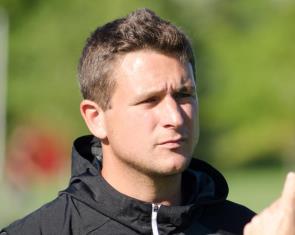
D3Soccer.com had the opportunity to interview the coaches of the four men’s teams heading to the Final Four. Ryan Souders, head coach at Calvin, spoke with Ryan Harmanis about getting to the Final Four back-to-back years, the impact that culture and faith has on his team, and how they stay so composed during difficult games.
|
| Ryan Souders - 5th-year head coach of Calvin Calvin College Athletics |
Ryan Harmanis: Coach, congratulations. I joked last year with Iain Byrne at Oneonta State, but we need to make this an annual conversation. Two Final Fours in a row, great accomplishment. How do you do it?
Coach Ryan Souders: Yea, thank you, we’re trying. Most of these schools that have gotten here I’d guess would tell you it’s two things. First, it’s institutional, and second, it’s cultural. I get to represent an institution where young men want to come get an education, engage academically, engage spiritually, and then athletically. So that’s the first thing is to have an institution where young men want to come to school. We preach that in general in Division III, so to see that at your school is great. And then culturally, I think we have a group of guys that have bought in for over a decade. This predates me. They’re at the institution for the right reasons, and that translates well into the soccer piece. We’ve been lucky to see the fruits of that the last few years.
RH: Yeah, and your team has done so well in the NCAA tournament, on a consistent basis. Can you discuss how the faith aspect and the mission of your school play a role in that success? It seems like you play a little looser than most teams, and even when things aren’t going well, you seem to stick with the way you play.
Coach Souders: That’s a great question, and it’s a tough one, because I think it really goes to an existential viewpoint. I’d say that we think we’re playing with house money, every single day, and we think that, as a Christian institution, the victory is won for us, from a faith component, so hopefully that allows us to play free. So it’s more of an offering, using our gifts and abilities, we offer that back to the Lord, so we don’t think we need to validate ourselves. Because of what Christ has done for us, that’s what validates us.
Now, I think that’s true in a vacuum. I would hope that we exercise that in the way we play, in the way that we interact with teams. I think it’s always scary, you put it out there, and other teams hear that and view you a little different. But it doesn’t mean we’re mistake free, but I think that’s hopefully our goal, and might be a reason why we play pretty loose, because we feel like we’re playing with house money.
RH: Turning towards some of the scheduling, people discount you because of your conference, it’s been two really good teams [Calvin and Hope] for a while, but the last few years you’ve had the only team that’s a real threat for the tournament. And then you have the double round robin, you only get two non-conference weekends. You schedule really good competition for those weekends, but then you’re in conference play for two months. How do you keep your team sharp throughout the season?
Coach Souders: Yea, I think it’s the same as last year. We get banged on for the MIAA, but here we are again, so I think that speaks well to the MIAA, to our league colleagues, my coaching colleagues, because in many ways they’ve prepared us for the tournament. So we’re proud of that. We also realize what the double round robin does to us for our strength of schedule, and it’s natural in any round robin. If any conference did it, it would hurt their strength of schedule.
But we always talk about process, and being committed to the process. So we make our own standard for what we want to accomplish. That’s in wins and losses, in conference and out of conference. Our goal is to be consistent and committed to the process of what we’re doing, and to be the best version of our team possible. I know that’s a cliché, but clichés exist for a reason—at some point they made sense—and we really want to be the best team we can possibly be.
RH: The second part of the scheduling is that you’re forced to go on the road and play against great teams in every single round. We had a top ten matchup with you against Ohio Northern, both teams are legitimate Final Four threats and you have to play them in the first round. I saw that draw and my first reaction was, “Wow. That’s really happening.”
Coach Souders: It’s interesting, about two minutes before kickoff, I was talking with [Ohio Northern] Coach Ridenour, and I just said, “Not exactly a fair first draw for either of us, is it?” And we both kind of laughed. But that’s what we have to deal with. Any of the teams we’ve played could be in the Final Four. Soccer is a game of thin margins, and I think we’ve worked really hard, but we’ve maybe been fortunate to be on the good end of all four of those games. We have an incredible amount of respect for all of our opponents. So our path is just what the committee handed us. It’s better to be playing in November than not, and I assure you there are teams that didn’t see their name come up that would have loved to have drawn Carnegie Mellon or Ohio Northern or Calvin or Ohio Wesleyan in the first round. I think it’s a matter of perspective. We were happy to be in the tournament, and then we go from there. Instead of being frustrated, it was just that we needed to go win games.
RH: Looking at those games, the story of the opening weekend was the defense and goalkeeping, you shut out Ohio Northern and Carnegie Mellon 1-0. Those are two high-powered offenses. Then the second weekend, and the offense comes to life. Can you talk about how each aspect of your team got you through those games?
Coach Souders: Yea, we want to try and be a well-rounded team. I think in any team setting, any relational setting, you have good days, you have bad days. So we need guys to pick each other up. Every team we see in the tournament is a good soccer team, if you get in, you’re a good team. So ideally we’d love to have both sides of the ball show up. We eked out just enough offense the opening weekend, and then [goalkeeper] Nate [Van Ryn] and our back four played really, really well. That was huge.
And then the second weekend, I don’t think our defense disappeared, we kept high-powered offenses to a single goal, but the offense made some stuff happen. I think the nature of that second game against Franklin and Marshall [a 4-2 win], them trying to chase the game a little bit after we equalized, that created more opportunities that would not have otherwise been there. So I think all four teams here score more goals than they give up [laughs], but that’s been key for us, especially after graduating a really good defensive class last year. Keeping the ball out of the net has been huge for us, and it’ll be huge again this weekend.
RH: Before we talk about individual players, I’m curious about the Messiah game. I posed the question before that weekend, is Messiah still the same program, or has the pack caught up a bit? They were a great team this year, but what’s it like facing them, with that aura, at their place, and then when you consider the faith missions of both schools?
Coach Souders: I think there are two lenses or viewpoints we looked at it from. One, because we share similar visions and missions of what we want to do in the lives of our young men, it’s incredibly cordial. [Messiah Head] Coach McCarty is a friend, [Assistant] Coach Faro is a really good friend, my wife is a Messiah alum, so I very much believe in the mission of what they’re trying to do. So in one sense, there’s great rapport, great friendship.
But there’s also a sense that both teams really want to win. And in an ideal scenario, that’s what competition looks like, right? This idea of teams striving together, that you bring out the best in each other. So I think we saw a lot of their best in the first half, we were on our heels for about 43 of 45 minutes [laughs], but you then saw some of our best in the second half. So it’s fiercely competitive, but not at the expense of the relationship. I know that they were obviously disappointed at the end of the game, but I don’t think they take that out on us or on me, and next time we’re with them we’ll get together and break bread and enjoy the chance again.
RH: Then you get an Elite Eight game against Franklin and Marshall, who you knocked out in the Sweet Sixteen last year. Was there anything left over from that, or was it just two good teams duking it out again?
Coach Souders: Really just two good teams duking it out again. I have a ton of respect for [F&M] Coach Wagner, and how he handles himself and their program. I know both teams lost a lot last year, so they were two different looking teams, but still very talented. I don’t know if there was anything from the year before, at least on our end. Last year was more of a defensive battle, 1-0, but I think at that point this year it was us getting a result.
Coming down from—not to elevate teams, but if you’re able to get a result against Messiah at Messiah, the challenge becomes the next night. Can you keep that level of intensity? Can you not be unemotional, since you’ve kind of spent everything you had the night before. So that’s what we talked about, could we have another good performance. Could we come out, right away, the way we did the second half against Messiah.
RH: Transitioning into the team aspect, you mentioned you lost a lot to graduation. You lost arguably one of the best senior classes in Calvin history, you have maybe the best season in school history. I watched you play the opening weekend at Ohio Wesleyan, and the talent was there, but it seemed like a ton of guys in new roles. Can you talk about your team’s development and what it’s been like pushing those new guys to step up?
Coach Souders: Sure. I think every team, every year, has to find it’s own voice. Coach K [Krzyzewski, basketball coach at Duke] talks about the life cycle of a team, the birth of it, all the way to its death at the end of the season. There might be some recovering or returning parts and pieces, but it’s a new group. So for us, we were trying to not hold on to last year, to create our own voice, but to do that in the shadow of what had been a very successful season. And it took us some time. Guys were in new positions, guys on our team had to find their literal voice within our culture, because we lost a pretty communicative senior last.
It was the role of our upper classmen, in particular, to shepherd that, to show the guys where we want to go and the process of getting there. We had to know that we weren’t going to be in the Final Four the first weekend. It’s impossible. That loss at Ohio Wesleyan [2-1 opening weekend] was really tough for us. I don’t think some of the guys were expecting it, and I don’t know if they really knew how to handle it at first. In the end that was good for us to reshape, and figure out who we really were as a team: what are our gifts, what are our skills. We weren’t last year’s team, so how can we move forward with the same ending goal, but maybe a different path.
RH: Right. So then to individual players. Watching those early games, the interesting guy for me was Trent Vegter. He played left back last year, you move him into the centerback spot this year. I don’t mean this in a mean way, but he looked really shaky the first 45 minutes against Capital [in the first game]. But since then, every time I see you play, he’s just so good back there. Can you talk about his development from being a freshman with less pressure to now being a dominant player.
Coach Souders: Yea, Trent could probably, I imagine, play anywhere on the field for us. So you mentioned those first 45 minutes at Capital, which was his first stint as a centerback. So I think it was an adjustment period. You look at him now, and he’s done really, really well. As simple as it sounds, he looks to do what he does well. He doesn’t play outside himself much, he obviously has physical gifts. We’d like him to communicate, to share everything he sees from the back and organize everything he sees. And hopefully that even escalates this weekend. I think there’s more that we can get from him, despite how good he’s been, but he’s been great for us, especially after graduating an All-American goalkeeper and centerback last year.
RH: Further forward, then, I looked at your roster preseason and identified two players that I thought were going to be “the guys” for you offensively. You have Stephen Hooker and Mitch Stark, banging in goals and assists, and I thought they’d have to carry the load. They’ve been very good, but now it seems like you have five, six, seven guys who are contributing. So talk about those two, but then also guys like Bobby McCaw, who have stepped up.
Coach Souders: Yea, Steph and Mitch are the guys where you know what you’re going to get. They’re consistent, and in what’s probably a backhanded compliment, I don’t think they wowed many teams in the recruiting process, they’re not overly big or physical. But they grind, they work, they have some pace, but just an incredible work effort. So they’ve both scored a lot of workmanlike goals and assists and have worked really well together.
Then I think as other teams have keyed in on those guys a bit, other guys have had to step up, and they’ve done that. So you look at Bobby, he’s in a nice run of form right now, Jacob [Witte] has been really good, Ian [Adams] as a freshman has done really well, and then obviously Isky [Van Doorne], it’s just been a collective thing. I think they all look to do the job at hand. Every one of them would tell you, I think, that they’d rather be playing this weekend than have 25 goals. And so I think that’s huge, to have that leadership from Steph and Mitch where it’s, “Look, I just want to keep playing, to stick together,” and that’s been huge. It’s allowed other guys on our team not only opportunity, but true space where they can grow as well.
RH: I had a question on that, reading stuff from people familiar with your program, they’ve suggested you’re maybe a little bit deeper than prior years, and that gives you something different, to be able to bring in guys off the bench and not have a drop off, to keep a higher level for 90 minutes. Do you see any difference in that from the last few years?
Coach Souders: Maybe? [Laughs] I think it certainly helped us last weekend, to have to play two really tough games, back-to-back, especially after a double overtime game against Messiah. We have guys who are really dedicated to doing a job, we talk a lot about that. It’s tough for a lot of young players, because they’ve all been all-world where they come from. So I look at guys who aren’t starting, or whose numbers aren’t where they’d want them to be, if they were being honest, but they’ve committed to doing their job, to being a sub, to working hard defensively, whatever it is. So I do think we’re a little deeper, but the guys coming off the bench have been really committed to the role they’ve been asked to fill.
RH: That feeds into the program, can you talk about how you’ve built your program stylistically. You combine really aesthetically pleasing soccer with dominance in the back, but most teams and people often think it’s an either-or approach.
Coach Souders: I think it’s probably that we’ve become that way a bit because of the situations we’ve been in. We want to try and play and keep the ball, but not at the expense of results. When you play good teams, they’re going to be on the ball for spells, so you have to be able to adapt, to make a stand defensively, to be okay without the ball for a period of time. I don’t know if we’ve necessarily sought it out and said, “Okay, this is who we want to be,” but I think we’ve been in situations where we’ve had to make a stand, then transition to where we’re on the ball and we need to make things happen.
We have to do what the game dictates, and it’s a credit to our guys, because they have to adapt. You know, I don’t get any 20-second timeouts to tell them things, so our guys have to recognize things and play through it. And they have to do that in the midst of the game, while the other team is trying to impose their will. So I think it takes young men that can recognize that and carry it out, that aren’t just problem “pointer-outers,” but problem solvers. That’s what we want from guys, and we’ve been pretty lucky to do it well.
RH: So then, you’ve been down in games, but from a mental perspective it doesn’t phase you. In the MIAA final, you’re up 1-0 on Alma, then bang-bang, down 2-1. You recover to win 4-2. You go down against Messiah, you go down against Franklin and Marshall, but you come back. What’s the mentality that allows you to go down a goal but keep the same approach and the same style of play to get back into the game?
Coach Souders: I think it is a mentality, and it speaks a lot to our senior leadership. I go back to our win last year at Ohio Wesleyan [2-1 in the NCAA second round], that was the first time we’d been down all year. And so I think there’s a belief, and that’s the first thing, is a belief that it can be done. We talked at halftime against Messiah, give a good account of yourselves. If you’re going to lose, that’s one thing, but do it with fight, with your best effort. So I think a lot of those things come down to intangibles, grit, fight, mentality, attitude, things that don’t show up on a recruiting profile of a five-tool player. I credit our upper classmen and our group as a whole in their belief, and then you create results that you can rely on, to say, “Hey, we’ve done this before.” Then it’s not just a term you throw out there, it’s a tangible thing you can draw on, and we’ve been able to come back like that a few times this year.
RH: When you talk about intangibles, and I know I asked this last year, but can you name a guy or two who is not the 15-goal scorer, but that is crucial to your team, he’s the heartbeat, he does the dirty work. Anyone you want to recognize.
Coach Souders: Well…jeez, I know you ask this question of coaches, and they stumble over this, because these guys are program makers. And if you only have one guy who does this, you might not make it to this weekend, and I don’t mean that in a bad way, but they’re so core to good teams and good cultures. Maybe the one that really stands out for us right now is James Jeninga. He’s a centerback, he hasn’t played much for us this year, but he communicates on the sideline, he’s one of the hardest workers in training, and he just does what he’s asked. And I think that any questions, or frustrations, that other guys might have, are squelched when they see his work rate, his attitude and his character. That’s going to serve him well for, I mean, the next sixty years of his life. Those are the type of young men we’re really proud of. To be honest I don’t want to elevate him because we have several others that do the same thing, and that’s one of the things that hopefully makes our program and our culture particularly special.
RH: Transitioning to this weekend, you were there last year, your program has been on the verge of a title, is there any conversation, is there any worry, where there’s a sense of, “We need to break through and win this thing”?
Coach Souders: Yes and no. We think that, because that’s what we want, it’s something we want to accomplish, it’s one of our goals. I don’t think there’s any added pressure in that it’s something we need to do, and maybe that’s aided by the fact that, seven years later, some people look at our conference and whatnot and think we still aren’t good enough to get there. I don’t think there’s any pressure, necessarily, like we have to do it, but again, I go back to our culture. It’s about time together. Would we love to win the national championship? Absolutely, we would, any coach would tell you that. But we like to train together, play together, compete together. So do we want to win this weekend, absolutely, but will our lives change dramatically either way, no, they’re not. Because our goal and our focus, those things won’t change.
RH: Looking back to last year, Loras [a 1-0 loss in the Final Four] was a difficult game, they were an aggressive, physical team that seemed to make your team a little uncomfortable. Is there anything you take from that game and use for this year?
Coach Souders: Honestly, not really. Each year is different. So if we were to say that this team and this season is unique, then to turn around and say we need to do something different that we should have done last year, that’s tough. I think at the end of the day, not arrogantly at all, but we want to focus on us. There are three other really, really good teams heading to Virginia. And anyone that comes out of this weekend is going to be a worthy and justified champion. So our job is to be the best version of us we can be, and that will give us the best chance to win. Three months into the season, for us to try to make drastic adjustments, it would be tough, and that’s where we go back to process and having it produce the results we’re after.
RH: When you look at Brandeis, they’re another team that likes to get the ball on the ground and play, they’ll tell you that. They’ve played a really difficult schedule, and then you’re coming off this gauntlet through the tournament, so what kind of feel do you have about the type of game it might be on Friday?
Coach Souders: It’s going to be a great Final Four-worthy game. They come out of what I view as one of the two best conferences in the country, they’re battle tested, they’re big, fast and physical, but they’re also good on the ball. So they’re a good, good soccer team, and I think you can expect a good, good soccer game. A great battle of two really good teams, but much more than that I’m not sure what I can offer you.
RH: Yeah, and I’ve found this curious and would love your thoughts on it, the Final Fours seem to differ from year to year. Last year, only four goals in three games, in 2014, 14 goals in three games. Do you have any theory on why that happens? Is it just the flow of the game, you mentioned against F&M they were chasing a little bit, is it as simple as nerves plus an early goal or two and suddenly we have an offensive explosion?
Coach Souders: I think so. You know goals really change games. So you look at last year against Loras, we missed a couple great chances early, and they got one, so that changed the game a bit. You saw Oneonta and Amherst unable to break through, so the style of the game never really changed. So the question becomes how teams adjust to the field, it being a turf field, how they adjust to the other pomp and circumstance down there. Truthfully, having followed D-III soccer for so long, I’ve seen Final Fours all over the place in terms of scoring. To say you expect it to be one way is really tough, but I think you’ll see three really good men’s games, and six great Final Four games.
RH: Last serious question: If there’s one thing your team needs to do to bring it home this year, what is it?
Coach Souders: I think we gotta fight. I think at this point, the soccer is hopefully there, or at least we know what that component needs to be, so we need to come out and really fight. Hopefully the soccer piece takes care of itself, I don’t know if I can point to any tactical specifics, but we need to be ready to battle from the opening whistle.
RH: And then last thing, on a more fun note. I asked Jon Lowery [head coach at St. Thomas], do you think there’s anything to the idea that goalkeepers make better coaches? We’re at the Final Four and you both were goalkeepers that achieved a ton of success, and here you are building great programs. Is that random, or does it play a role?
Coach Souders: You know, there might be something to it, something about seeing the whole picture from where we learned the game, from having to communicate, so maybe the importance of that. Maybe the importance of defending your box, set pieces, little details that make the difference. But Jon was a significantly better goalkeeper than I was [laughs], so I’m sure his answer was much better. It’s funny, though, when you look around the country. I’m tied tangentially to the Notre Dame program, you look at Coach [Bobby] Clark, he was a goalkeeper and he’s one of the most revered coaches at any level in the country or the world. So I don’t know that he’d say there’s anything to it, maybe we’re just dumb enough to stick so hard to this, and keep trying, maybe that’s all it is.
RH: [Laughs] Yeah, I just thought it was an interesting thing to toy with. But this was great. Thank you. Coach. Really looking forward to watching your team play on Friday. Good luck.
Calvin (22-2-0) takes on Brandeis (13-5-4) in the second men’s semifinal at 1:30pm on Friday, December 2nd.
|
Other Interviews:
|
Comments or feedback for the author? E-mail Ryan Harmanis.